TGFβ signaling systems are prone to inhibition and ligand competition by coreceptor

TGFβ signaling systems are prone to inhibition and ligand competition by coreceptor
Fares, W. A.; Janes, K. A.
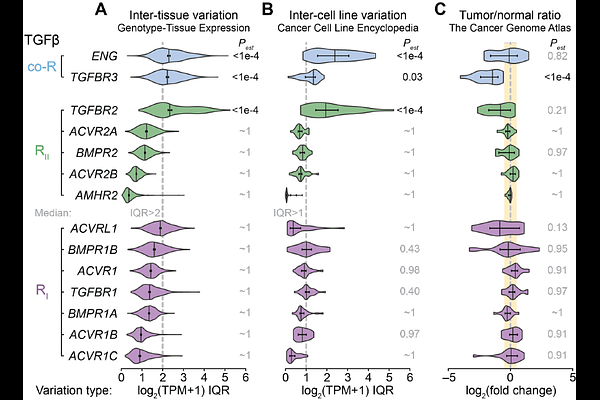
AbstractTransforming growth factor-{beta} (TGF{beta}) ligands and receptors interact with overlapping selectivity to form different signaling complexes. This many-to-many wiring provides versatility in how ligands are perceived and cell types become activated, but the systems-level impact of coreceptors, which bind TGF{beta} ligands yet do not signal, remains unresolved. We examined the role of canonical surface-bound coreceptors by numerically simulating TGF{beta} ligand-receptor systems of increasing complexity and pairing results with single-cell measurements in acutely stimulated cells. Using sampled combinations of biologically plausible rate parameters and initial conditions, we find that coreceptors inhibit downstream signaling six times more often than they promote it, and the models reconcile this inhibitory bias with the prevailing view that coreceptors either promote or inhibit signaling. In multi-ligand systems, coreceptor inhibition causes stimuli to be perceived differently by altering competition, and this threshold is confirmed in cells engineered to induce a single coreceptor heterogeneously. Coreceptors are among the most variably expressed components of TGF{beta} signaling, suggesting that cells exploit coreceptors as a way to switch active ligand-receptor landscapes with a single gene.