In vitro EAS-mediated activity of Alternaria toxins

In vitro EAS-mediated activity of Alternaria toxins
Spilioti, E.; Spyropoulou, A.; Gate, L.; Lorcin, M.; Machera, K.; Nestora, A.; Repouskou, A.; Theologidis, I.; Marko, D.; Behr, A.-C.
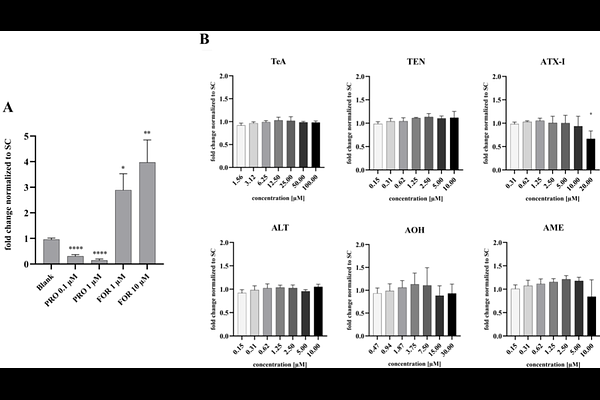
AbstractAlternaria mycotoxins represent an emerging concern due to their frequent occurrence in food and feed. However, available toxicological data remain limited. Under the current EU regulatory framework, and in line with the EFSA/ECHA/JRC guidance for the identification of endocrine disruptors (EDs), assessment of endocrine activity relies on standardized assays performed according to OECD Test Guidelines (TGs) for the estrogen-, androgen- and steroidogenesis- (EAS) modalities. Within the framework of the European Partnership for the Assessment of Risks from Chemicals (PARC), standardized in vitro methods of regulatory relevance were performed for six chemically characterized Alternaria toxins, aiming to address current regulatory gaps on EAS-mediated activity. Alternariol (AOH), alternariol monomethyl ether (AME), tenuazonic acid (TeA), altertoxin-I (ATX-I), tentoxin (TEN) and altenuene (ALT) were assessed over a broad concentration range, from 0.001 up to 60 uM, depending on cytotoxicity and solubility profile of each compound. Our findings indicate estrogenic activity for AOH (PC50: 3.9 - 4.6 uM) and AME (PC50: 5.2 - 8.5 uM) in the estrogen receptor transactivation assay (OECD TG 455), as well as an anti-estrogenic activity for ATX-I (IC30: 0.27 - 0.37 uM). Minimal positive responses were observed at high concentrations for AOH (from the dose of 3 uM) and for AME (from the dose of 10 uM) in the agonistic part of the androgen receptor transactivation assay (OECD TG 458), which may also reflect glucocorticoid receptor activation. No effects on estradiol or testosterone production were observed for any of the tested Alternaria compounds in the steroidogenesis assay (OECD TG 456).