Integrating glycosylation in de novo protein design with ReGlyco Binder Design Filter

Integrating glycosylation in de novo protein design with ReGlyco Binder Design Filter
Singh, O.; Fadda, E.
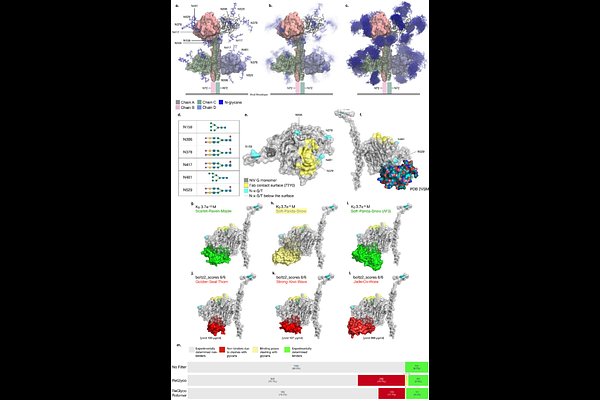
AbstractArtificial Intelligence (AI)-based methods for 3D protein structure prediction are revolutionising structural biology, providing novel templates for experimental data refinement and an on demand 3D perspective on any molecular architecture and protein-protein interaction (PPI). Regardless of the inherent limitations of the various approaches available to date, the continuous improvement of the algorithms, the broad availability of open access (OA) web servers, software packages and databases are bound to accelerate the discovery and optimisation of novel biopharmaceuticals. Within this context, the development of computational pipelines for the de novo design of target-specific protein binders is especially exciting. As it stands, these processes are still rather inefficient and expensive, rapidly outputting thousands of designs relatively quickly, which translate into meagre yields. Here we show how the explicit integration of glycosylation as a filter in the 3D de novo design pipeline can significantly improve efficiency and reduce laboratory costs with minimal additional computational resources. As a proof-of-concept, we used the GlycoShape database and ReGlyco tools to filter the results of a recent open competition launched by Adaptyv Bio for the design of binders as inhibitors against the heavily glycosylated Nipah virus glycoprotein (NiV-G). Screening of the 1,201 selected designs in block with ReGlyco, refined with the new ReGlyco Rotamer tool, flagged 11% of non-binders prior to experiment in approximately 3 hours on a dual-core CPU. We complement this analysis with a demo colab notebook to illustrate our workflow. In this demo users can design mini-binders against human erythropoietin (hEPO) by integrating GlycoShape resources with the RFdiffusion3 (RFD3) pipeline from the Institute for Protein Design (IDP).