Lineage recording reveals hijacked hepatic progenitor states as a common origin of HCC and ICC

Lineage recording reveals hijacked hepatic progenitor states as a common origin of HCC and ICC
Fan, J.; Pei, J.; Xu, N.; Wang, X.; Mao, S.; Zhang, Y.; Yu, L.; Sun, Y.; Gong, Y.; Xiong, X.; Wang, S.; Sun, X.; Chen, L.; Liu, X.
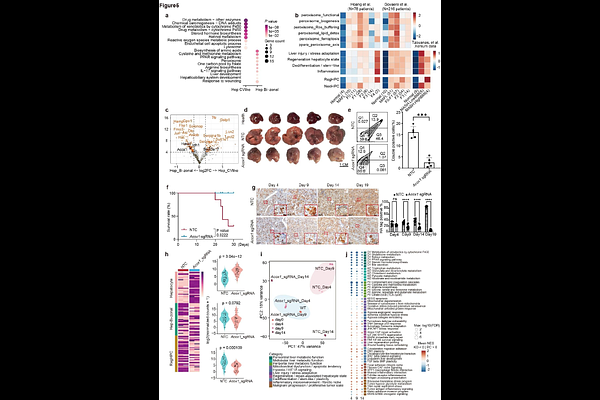
AbstractFatty liver disease predisposes to primary liver cancer, yet the lineage routes and niche mechanisms that select rare tumor-fated hepatocytes remain unclear. Here we developed CERAMIC, a high-capacity CRISPR-Cas9 lineage recorder that co-recovers editing scars and transcriptomes from single cells, and applied it to an AKT/NRAS-driven model of MASLD-associated liver tumor initiation. Longitudinal lineage, single-cell and spatial analyses revealed a hierarchical trajectory in which Hep_Bi-zonal cells, rather than Hep_CVlike cells, generated regenerative and neoplastic hepatocyte progenitor states that progressed toward both hepatocellular carcinoma and intrahepatic cholangiocarcinoma lineages. Tumor-fated cells preferentially expanded along a remodeled midlobular-periportal axis and depended on ACOX1-mediated peroxisomal beta-oxidation to withstand lipotoxic and oxidative stress. Spatial and lineage analyses further identified a sequential lipid-associated macrophage niche, in which monocyte-derived LAMs engaged tumor-fated hepatocytes through an LGALS9-P4HB axis, and P4HB inhibition suppressed tumor expansion. These findings define liver tumor initiation as a lineage-restricted process licensed by peroxisomal metabolic adaptation and macrophage-derived niche signals.