Genomic characterization of Escherichia coli and Enterobacter hormaechei clinical isolates from a tertiary healthcare facility in Kenya

Genomic characterization of Escherichia coli and Enterobacter hormaechei clinical isolates from a tertiary healthcare facility in Kenya
Musundi, S.; Kimani, R. W.; Waweru, H. K.; Wakaba, P.; Mbogo, D.; Essuman, S.; Onyambu, F.; Kanoi, B. N.; Gitaka, J.
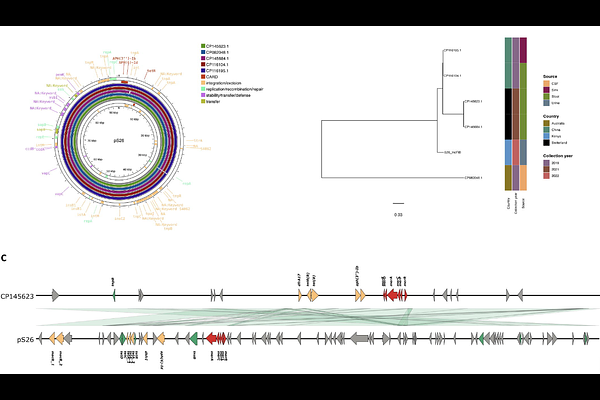
AbstractExtended-spectrum beta-lactamase-producing Enterobacterales such as Escherichia coli and Enterobacter hormaechei represent a growing public health challenge in clinical settings, particularly in low- and middle-income countries, due to the escalating threat of antimicrobial resistance (AMR). In this study, we aimed to identify the antibiotic resistance genes present in E. coli (n=4) and E. hormaechei (n=3) clinical isolates. Multidrug-resistant phenotypes were confirmed using disc diffusion assays against 20 antibiotics. Whole-genome sequencing of resistant isolates was performed using Oxford Nanopore Technologies. Genome assembly and analysis revealed high-risk clones, including sequence type (ST) 1193 in E. coli and ST78 in E. hormaechei. All E. coli isolates harbored the blaCTX-M gene in their chromosomes along with point mutations conferring resistance to fluoroquinolones, while E. hormaechei isolates encoded blaACT in their chromosomes. Additionally, both species carried plasmids with multiple antibiotic resistance genes, including blaOXA and blaTEM, co-located with metal resistance operons, indicating the potential for horizontal gene transfer. BLAST analysis revealed high sequence similarity between the plasmids identified in clinical isolates and those previously recovered from environmental sources, highlighting the role of environmental reservoirs in AMR dissemination. Notably, no carbapenem resistance genes were detected in any isolate. These findings underscore the growing threat posed by multidrug-resistant Enterobacterales in clinical settings and emphasize the urgent need for strengthened infection prevention and control measures to mitigate AMR spread.