PARP1 inhibition regulates tumor progression through modulation of RhoGDIα and vimentin in triple negative breast cancer

PARP1 inhibition regulates tumor progression through modulation of RhoGDIα and vimentin in triple negative breast cancer
Rajawat, J.; Shukla, N.; Shukla, A.; Singh, M.; John, A. A.; Singh, D.; Sharma, M.; Mishra, D. P.
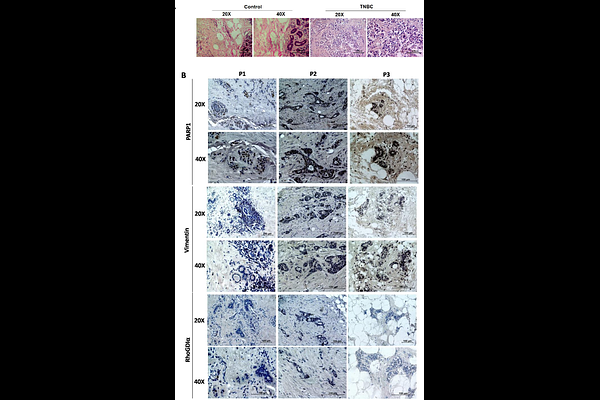
AbstractBackground and Purpose PARP inhibitors have been evaluated in clinical trials for several cancers and Olaparib is FDA approved for treating BRCA deficient ovarian cancer. Numerous reports have suggested Poly(ADP-ribose) polymerase1 (PARP1) overexpression in a variety of cancers including breast carcinomas and proposed the role of PARP1 in metastasis. However, the mechanism of PARP1 in regulating metastatic process in BRCA proficient and deficient TNBC is not studied thoroughly. In this study, we propose that PARP1 mediated breast carcinoma progression is gene transcription mediated, where it regulates several steps of pro-metastasis. Experimental Approach PARP inhibitors effect on metastasis was monitored by migration and invasion assay, modulation in protein expression was assessed by proteomic analysis and further confirmed by immunoblotting. Chromatin immunoprecipitation was performed to study the transcriptional role of PARP1. Ectopic expression and siRhoGDI, and immunofluorescence assessed the cytoskeleton changes. PARP inhibitor was administered in xenograft mice to study metastasis. Immunohistochemical analysis was done on patient and mice tissues. Key results Breast cancer cells exhibited reduced migration and invasion due to PARP1 inhibition. PARP1 regulates expression of vimentin and RhoGDI, and hence cytoskeletal rearrangement, causing a change in migrating potential of a cell. Metastasis in mice was reduced upon PARP inhibition. PARP1 was identified to be a novel transcriptional regulator of RhoGDI. Furthermore, RhoGDI ectopic expression substantiated the PARP inhibitor effects, suggesting the PARP inhibitor downstream signaling to be mediated through RhoGDI. Conclusions and Implications We identified a novel aspect of PARP1 as promoter of metastasis via transcriptional regulation of RhoGDI. Assessing RhoGDI levels in TNBC patients might be useful to predict sensitivity to PARP inhibitors.