Modulation of the agonist and antagonist activity of peptidic FPR1 ligands through N-terminal modifications: A structural and functional analysis

Modulation of the agonist and antagonist activity of peptidic FPR1 ligands through N-terminal modifications: A structural and functional analysis
Maskri, S.; Pajonczyk, D.; Massa, J.; Raabe, C.; Boedeker, T.; Wuensch, B.; Rescher, U.; Koch, O.
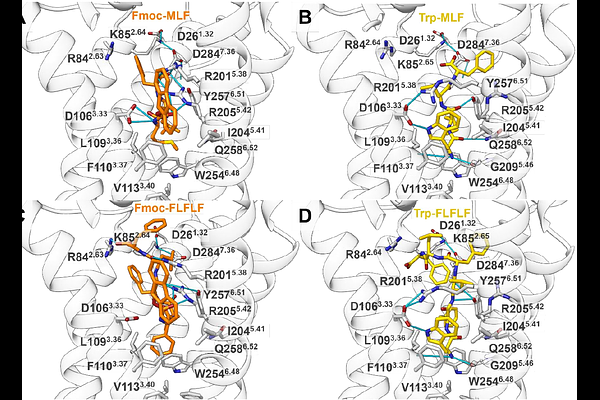
AbstractFormyl peptide receptor 1 (FPR1) is a promising therapeutic target for the treatment of inflammatory and infectious diseases. Although multiple classes of peptides are known to modulate FPR1 activity, comprehensive studies systematically linking N-terminal modifications to binding, mechanism of action and functional outcomes remain limited. In this study, we aimed to rationalise the binding and activity of three peptide series (MLF, FLFLF, and MLFYLA) featuring diverse N-terminal modifications from a structural point of view. A combined in silico and in vitro approach was employed to evaluate the activity of newly designed peptide agonists and to generate mechanistic binding hypotheses. Our findings led to the identification of a transmembrane binding pocket in FPR1, which provides a structural basis for the observed antagonist and partial agonist behaviours and leads to a generalisable strategy for tuning the functional outcome of peptidic ligands.