Network-scale disruption of RNA-protein interactions by a bioaccumulating small-molecule drug

Network-scale disruption of RNA-protein interactions by a bioaccumulating small-molecule drug
Jiang, X.; Mozzachiodi, S.; Roux, I.; Makwana, M.; Zhou, W.; Villanueva, E.; Kamrad, S.; Lindell, A.; Beristain-Covarrubias, N.; Ingole, K. D.; Zhang, N.; Patel, S. K.; Blasche, S.; Lilley, K. S.; Patil, K. R.
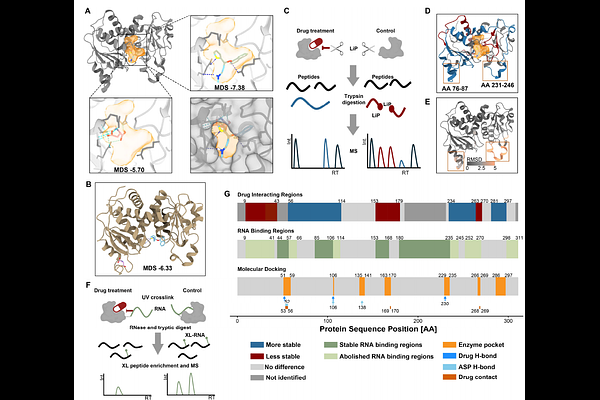
AbstractMany small-molecule drugs accumulate in both host and gut microbial cells. Yet, the molecular consequences of intracellular drug accumulation are largely unknown. Here we show that the antidepressant duloxetine broadly disrupts RNA-protein interactions revealing a previously unrecognized mode of drug effect. Across phylogenetically diverse bacteria and human intestinal cells, duloxetine consistently reduced RNA-binding capacity, with approximately 80% of RNA-binding proteins responding to duloxetine in bacteria (E. coli IAI1) and human (Caco-2) cells. As a mechanistic example, we show how duloxetine disrupts interactions between the pyrimidine biosynthesis enzyme PyrB and transcripts encoding metabolically linked functions. Biochemical and structural analyses show that duloxetine competes with aspartate, the natural substrate of PyrB, weakening the enzyme3's binding with 3' UTR-localized stem-loop structures in its RNA partners. Overall, our results uncover the off-target disruption of RNA-protein interactions due to drug accumulation and have implications for understanding molecular basis of variation in drug efficacy and toxicity.