Nature's antivenom: Combinations of conserved rattlesnake serum metalloproteinase inhibitors block the lethal action of viper venoms

Nature's antivenom: Combinations of conserved rattlesnake serum metalloproteinase inhibitors block the lethal action of viper venoms
Carroll, S.; Ukken, F. P.; Ayinuola, Y. A.; Escalana, L.; Suntravat, M.; Sanchez, E. E.
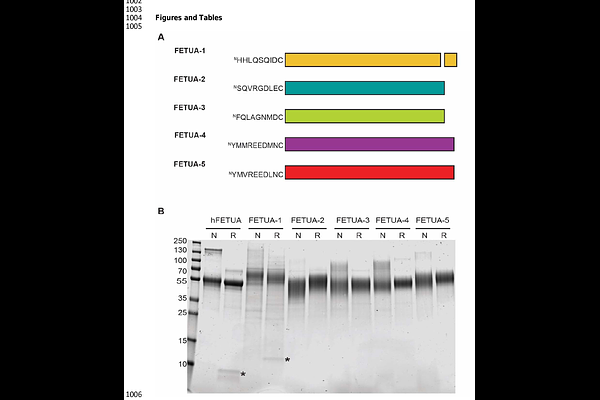
AbstractSnakebite maims or kills several hundred thousand people each year. For more than a century, treatment has relied on antivenoms derived from animals immunized with whole venoms, but their efficacy, safety, and availability are highly variable, and it is often not well understood which specific venom components must be inhibited to prevent mortality and major morbidities. New therapeutic approaches are needed. here, we take an evolutionary approach to antivenom design inspired by the longstanding observation that vipers have evolved serum-borne toxin inhibitors that confer resistance to their own venoms. We have investigated the abilities of a family of four rattlesnake metalloproteinase (MP) inhibitors derived from the ancestral serum glycoprotein Fetuin-A (FETUAs) to neutralize the enzymatic, hemorrhagic, and lethal activities of viper venoms. We find that while certain individual FETUA proteins are able to inhibit enzymatic or hemorrhagic activity, they are unable or only partially able to inhibit venom lethality. However, we show that specific combinations of FETUA proteins complement one another's activities and are sufficient to fully neutralize rattlesnake venom lethality with approximately 10 times greater potency than commercial antivenom. Moreover, we demonstrate that FETUA proteins are well-conserved among vipers subfamilies and that rattlesnake FETUAs are able to inhibit the MPs and neutralize the lethality of several evolutionarily distant pit viper or true viper venoms. Our results highlight the critical importance of inhibiting MPs in hemorrhagic venoms and the potential general utility of combinations of naturally evolved, recombinant MP inhibitors in the treatment of viper snakebite.