Nuclear translocation of phosphorylated YB-1 via small extracellular vesicles contributes to the malignant phenotype of triple negative breast cancer

Nuclear translocation of phosphorylated YB-1 via small extracellular vesicles contributes to the malignant phenotype of triple negative breast cancer
Santos, M.; Kim, Y.; Feng, Z.; Biebighauser, T.; Lorico, A.; Sossey-Alaoui, K.
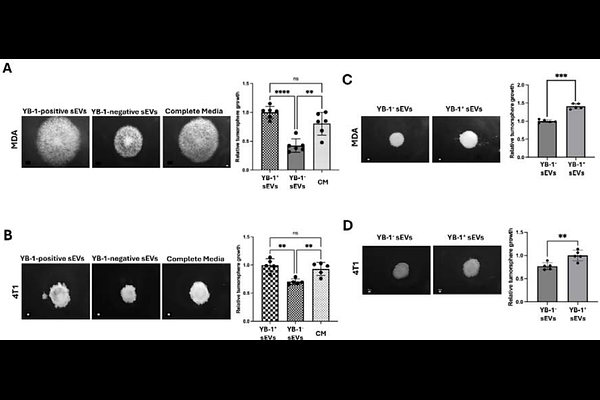
AbstractDespite continuous progress in diagnosis and therapy, breast carcinoma (BC) remains a major health problem. Triple-negative (Estrogen Receptor-/Progesterone Receptor-/HER2-) breast cancer (TNBC) is the most aggressive subtype due to its high metastatic potential and resistance to chemotherapy. The Y-box binding protein 1 (YB-1) transcription factor, a protein present in both cytoplasm and nucleus, is a driver of TNBC malignancy as it stimulates its cancer stem cell phenotype and disrupts cell cycle progression. Here, we hypothesized that YB-1-containing sEVs deliver YB-1 to the nuclear compartment of recipient cancer cells and play a major role in the activation of the metastatic process. We found a selective enrichment of YB-1 in sEVs from MDA and 4T1 cells, with ~65% and 50% of all sEVs positive for YB-1 by d-STORM. Administration of sEVs from wild-type MDA and 4T1 to their YB-1 knockout counterparts resulted in nuclear translocation of sEV-associated YB-1 and increased tumorsphere formation. Pharmacological blockade of the nuclear transport machinery based on the inhibition of the formation of the VOR complex (VAP-A-ORP3-Rab7) by PRR851 impaired both nuclear translocation and the YB-1-induced increase in tumorsphere formation. YB-1 phosphorylation at S102 was required for nuclear localization. In fact, loss of YB-1 phosphorylation inhibited tumorsphere growth and stemness of cancer cells and YB-1-positive sEVs restored the oncogenic behavior of cancer cells expressing phospho-mutant YB-1. Moreover, PRR851 inhibited the nuclear translocation of the phosphorylated form of YB-1 and the oncogenic behavior of the TNBC cells. These data support the conclusion that the nuclear translocation of sEV-associated phosphorylated YB-1 is an important factor in the malignant behavior of TNBC and a potential therapeutic target.