From culture to clarity in four hours: accelerating clinical management of bloodstream infections using metagenomics

From culture to clarity in four hours: accelerating clinical management of bloodstream infections using metagenomics
Ali, J.; Bellankimath, A. B.; Opgard, S. T.; Manivannan, E. V.; Simonsen, G. S.; Ahmad, R.
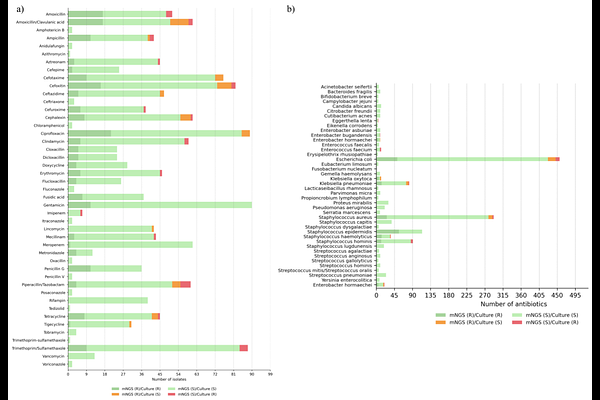
AbstractBackground Metagenomic next-generation sequencing (mNGS) has the potential to transform clinical diagnostics for bloodstream infections (BSIs). However, its clinical utility is currently limited by several challenges, including the extraction of DNA from blood cultures. Our aim was to develop, evaluate, and optimize an in-house method for host depletion and bacterial DNA extraction from positive blood cultures to enable rapid mNGS-based pathogen detection and antimicrobial resistance profiling, informing clinical management of BSIs. Methods 151 clinical blood cultures (115 positive and 36 negative) were processed for DNA extraction using an in-house-developed SEPSINN method for host depletion and bacterial DNA extraction. mNGS on the MinION was performed, and the results for pathogen identification and antimicrobial susceptibility predictions were compared with the routine clinical workflow. SEPSINN was also evaluated against a commercial DNA extraction method to assess its effectiveness in depleting host DNA and recovering bacterial DNA. Results The SEPSINN method achieved up to 1000-fold depletion of host DNA and outperformed the commercial DNA extraction method. At the sample level, mNGS achieved 100% accuracy, specificity, and sensitivity, identifying at least one pathogen in all 115 positive blood cultures. At the pathogen level, mNGS showed 98% accuracy (120/123), specificity, and sensitivity. For antimicrobial susceptibility predictions, mNGS achieved an accuracy of 95% (1382/1451), a sensitivity of 88% (203/230), and a specificity of 97% (1179/1221). Moreover, the method also identified fungi, indicating a wider taxonomic range. mNGS resulted in an approximately 4-hour turnaround time for pathogen identification and resistance profiling. Conclusions The method can provide information on BSI clinical management within approximately 24 hours of receiving the sample, including the time required for culture positivity. This represents an important advancement in the clinical management of BSIs, with the potential to save lives and promote antibiotic stewardship.