The receptor kinase NILR1 confers nematode resistance through developmental rather than canonical immune signaling

The receptor kinase NILR1 confers nematode resistance through developmental rather than canonical immune signaling
Euler, M. F.; Aslam, S.; Neumann, S.; Grundler, F. M. W.
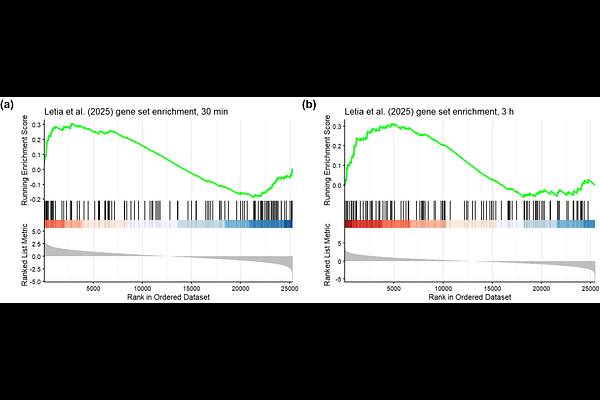
AbstractNILR1 contributes to quantitative resistance against Heterodera schachtii and signals through a brassinosteroid-type kinase cascade, but whether its contribution engages canonical immune signaling or follows a distinct, developmentally biased logic has remained unclear. We profiled early transcriptional responses of wild-type and nilr1 roots to H. schachtii by RNA-seq at 30 min and 3 h post inoculation and analyzed them using a genotype x treatment interaction model, complemented by gene set enrichment and integration with cell-type-resolved, brassinosteroid-responsive regulatory networks. We found that canonical PTI marker transcription and flg22-induced ROS production were preserved or even elevated in nilr1, indicating that the tested PTI outputs are largely maintained despite increased susceptibility. Instead, genes whose nematode-induced responses showed NILR1-sensitive interaction effects were enriched for a HAT7/GTL1 centred cortex developmental module, and genetic disruption of GTL1/DF1 moderately altered H. schachtii parasitism, consistent with a role for this module in shaping host permissiveness. Our data support a model in which NILR1 contributes to nematode resistance primarily via developmental, brassinosteroid-type signaling rather than via the canonical PTI outputs assayed here, consistent with a co-option of BRI1 clade (LRR-RLK-Xb) architecture - a receptor family classically associated with development - into a pathway that modulates susceptibility to a plant-parasitic nematode.