Evaluating DNA metabarcoding to characterise diet diversity and foraging strategies in a generalist mesopredator, the lesser black-backed gull (Larus fuscus)

Evaluating DNA metabarcoding to characterise diet diversity and foraging strategies in a generalist mesopredator, the lesser black-backed gull (Larus fuscus)
Risely, A.; Carss, D. N.; How, E. F.; Donato, B. J.; Frayling, T. D.; Poulab, E.; Guimaraes Sales, N.
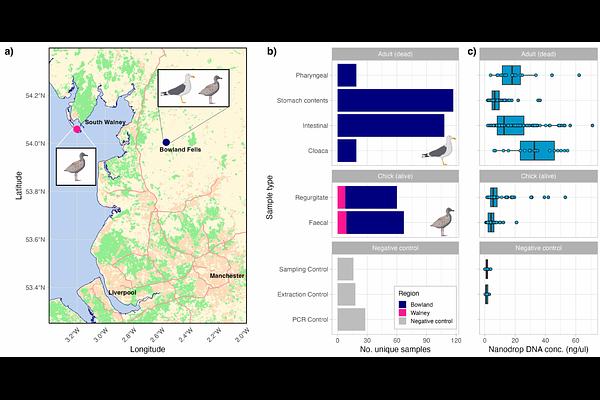
Abstract1) Information on diet composition at both individual and population levels is fundamental to understanding resource use and availability, which influence individual fitness and the population dynamics of both predators and their prey. DNA diet metabarcoding offers a powerful molecular approach to diet analysis, but its application can be limited by methodological biases, particularly in generalist species with highly diverse diets. 2) Here, we evaluate the performance of DNA metabarcoding for diet analysis in the lesser black-backed gull (Larus fuscus), a highly generalist mesopredator whose populations have shown complex responses to changes in natural and anthropogenic food resources over the past half-century. We collected faecal and regurgitate samples from pre-fledging chicks at two coastal and inland breeding colonies in northwest England, alongside pharyngeal, stomach, intestinal, and cloacal swabs from adult gull carcasses. Samples were analysed using COI (targeting animal DNA) and 12S (targeting vertebrate DNA) metabarcoding markers, and three blocking primers were developed to reduce host amplification in 12S libraries. 3) Metabarcoding performance varied substantially among sample types and primer combinations. Without blocking primers, usable dietary information was recovered from regurgitate and stomach samples but not from intestinal or faecal samples. Blocking primers improved recovery of dietary DNA from faecal samples, but also increased the amplification of contaminants, elevating the risk of false-positive detections. 4) Across all sample types, metabarcoding identified 71 unique species belonging to 61 genera, including earthworms, small mammals, commercial and non-commercial fish species, lapwing, and urban-derived food products originating from livestock species. Dietary profiles revealed distinct clusters of consumed species associated with urban, agricultural, and marine foraging strategies, and demonstrated differences in dietary niche between age and colony cohorts. 5) Overall, DNA metabarcoding enabled the detection of a highly diverse diet and revealed differences in resource use among colonies and age cohorts. These findings demonstrate the potential of DNA metabarcoding to advance our understanding of diet in highly generalist species and contribute to ongoing efforts to understand how dietary variation may shape demographic processes in highly dynamic populations.