Physiological limits of localized hypothermia in the human cochlea: The role of vascular heat transport

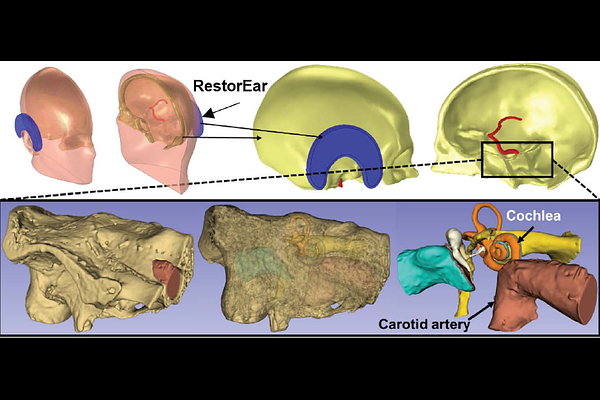
Physiological limits of localized hypothermia in the human cochlea: The role of vascular heat transport
McCorkendale, B.; Rodriguez, R.; Fink, R.; Moore, M.; Romero, S.; Esmailie, F.
AbstractPurpose: Mild therapeutic hypothermia (MTH) preserves cochlear function in animal models and is now entering early-phase human trials for hearing preservation. However, the extent to which the human cochlea can actually be cooled, and the mechanisms underlying MTH, remain unclear, in part because blood perfusion is expected to oppose localized cooling. In this study we evaluated the impact of blood flow on human cochlear temperature exposed to the MTH device using a combined experimental and computational approach. Methods: Temperature measurements were obtained from a human cadaver skull exposed to a commercial MTH device. These data were used to validate a three-dimensional bioheat transfer model incorporating realistic skull anatomy. The validated model was subsequently extended to include physiological blood perfusion in the internal carotid artery; a major heat source located near the cochlea. Finally, the in silico model was further expanded to incorporate the surrounding skin and brain tissues. Results: Incorporating blood flow in internal carotid artery substantially altered predicted cochlear temperature distributions, highlighting the importance of localized vascular heat transport in the human cochlea during MTH. Although cochlear cooling was attenuated in the presence of perfusion, the therapeutic effects of MTH may not depend solely on the magnitude of local intracochlear temperature reduction. Additional mechanisms, such as reduced facial surface temperature, may also contribute to its efficacy. Conclusion: The validated in silico model provides a physiologically realistic framework for evaluating human cochlear thermal responses, investigating MTH mechanisms, and optimizing temperature-based strategies for hearing preservation.