Effect of pH on the secretome profile of the human pathogen <Candidozyma auris>

Effect of pH on the secretome profile of the human pathogen <Candidozyma auris>
Ramos-Pardo, A.; Quindos, G.; Eraso, E.; Sevillano, E.; Kaberdin, V. R.
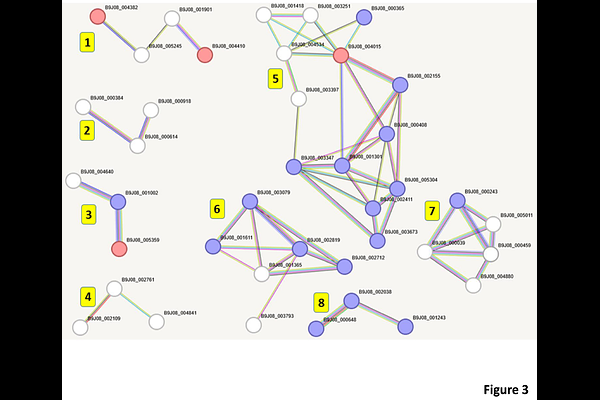
AbstractSecreted virulence factors (e.g., hydrolytic enzymes, toxins, agglutinins) play an important role in human diseases. Nevertheless, their secretion by some pathogenic fungi, especially some virulent <Candida>-related species such as <Candidozyma auris>, is still only partly characterized. Here we used high-throughput mass-spectroscopy analysis to identify polypeptides secreted by <C. auris> into growth medium under two physiologically relevant pH conditions: pH 5.5 and pH 7.5. This analysis revealed that many secreted polypeptides belong to putative virulence factors and enzymes involved in cell wall biogenesis. Moreover, we found that 13 and 27 polypeptides were detected only at pH 5.5 or pH 7.5, respectively. Furthermore, our findings indicate that lower pH (pH 5.5) favours secretion of several putative virulence factors including aspartic proteases and polypeptides potentially facilitating host-pathogen interactions. In contrast, the majority of polypeptides detected only at pH 7.5 are involved in N-glycosylation and protein folding. Thus, this secretome analysis reveals numerous <C. auris> polypeptides with putative roles in infection and host-pathogen interactions. Moreover, their differential secretion at pH 5.5 and pH 7.5 may reflect different strategies used by <C. auris> to elicit infections in different anatomical sites.