Belgian endive-derived biostimulant activity in Arabidopsis, lettuce and sweet pepper at different developmental stages, environmental conditions, and application methods

Belgian endive-derived biostimulant activity in Arabidopsis, lettuce and sweet pepper at different developmental stages, environmental conditions, and application methods
Ogunsanya, H. Y.; Petit, C.; Audenaert, K.; De Zutter, N.; Geelen, D.
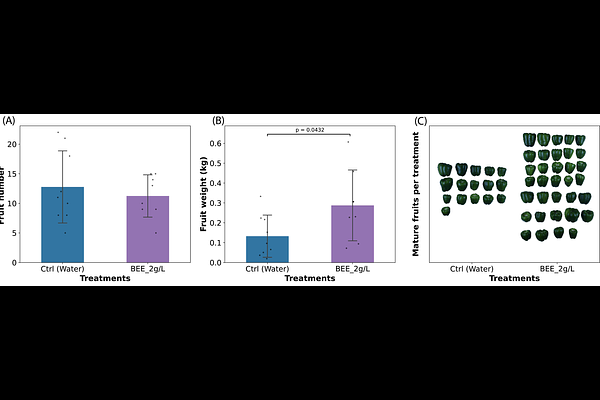
AbstractBelgian endive-derived biostimulant (BEE) was previously shown to enhance root and shoot growth of Arabidopsis thaliana and Plectranthus esculentus in in vitro culturing conditions. In this study, we evaluated the eYect of BEE on A. thaliana subjected to abiotic stresses and assessed the translatability of its bioactivity on lettuce (Lactuca sativa) and sweet pepper (Capsicum annuum) cultured in substrate and soil. A first set of experiments tested the impact of BEE on protection during, and restoration after, osmotic or salt (NaCl) stress. BEE treatment had little to no rescuing eYect when plants were exposed to osmotic stress. In contrast, BEE strongly promoted shoot development and leaf health both under standard and NaCl stress conditions. Under mild stress, BEE enhanced photosynthetic eYiciency and chlorophyll content in Arabidopsis, whereas it did not significantly alleviate osmotic stress induced by sorbitol. To evaluate the eYect under ex vitro conditions, BEE was applied via root drenching to substrate-grown A. thaliana, lettuce, and sweet pepper. BEE improved leaf greenness and photosynthesis enhancing Arabidopsis rosette development, but it did not increase lettuce head weight. In sweet pepper, BEE increased fruit yield and promoted fruit maturation. Under drought stress conditions, BEE application did not improve sweet pepper yield.