Comparative reproductive biology and impacts of selfing in two epiphytic Bromeliaceae

Comparative reproductive biology and impacts of selfing in two epiphytic Bromeliaceae
Felton, J. M.; Heschel, M. S.; Bodine, E. N.; Jabaily, R. S.
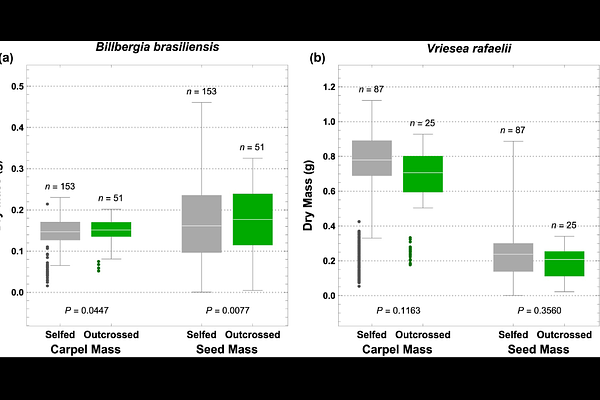
AbstractThe breeding systems of most Bromeliaceae have not been tested directly. We characterized the floral biology and breeding systems of two epiphytic, tank-forming bromeliads endemic to the Atlantic Forest of Brazil, Vriesea rafaelii (Tillandsioideae) and Billbergia brasiliensis (Bromelioideae), using controlled self- and cross-pollinations in a greenhouse. Both species were self-compatible. Based on seed-set, the self-compatibility index was 0.59 in V. rafaelii and 0.87 in B. brasiliensis. In B. brasiliensis, selfed flowers produced lighter fruits and lighter seeds than outcrossed flowers, whereas in V. rafaelii fruit and seed mass did not differ between self- and cross-pollinated flowers. A subset of V. rafaelii flowers showed a spatial separation of the anthers and stigma (herkogamy) that prevented autonomous selfing. These results add two species to the small set of bromeliads with experimentally characterized breeding systems and highlight differences in reproductive output with selfing.