A Matter of Degrees: Latitudinal Variation in the Transcriptional Response to High and Low Temperatures in an Estuarine Cnidarian

A Matter of Degrees: Latitudinal Variation in the Transcriptional Response to High and Low Temperatures in an Estuarine Cnidarian
Bhalodi, J. A.; Reitzel, A. M.
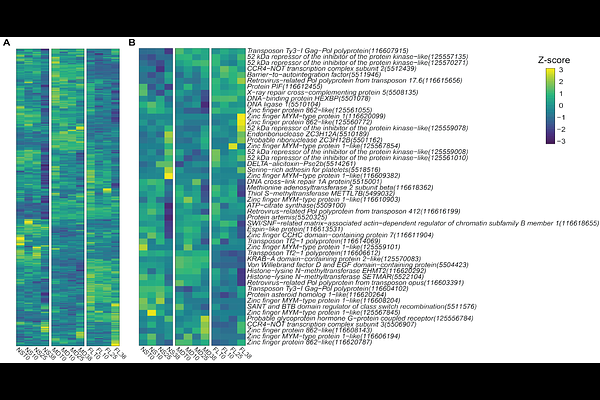
AbstractPopulations of the same species inhabiting distinct geographical regions must meet the requirements of local thermal regimes to survive. While individuals integrate both deeply conserved and genotype-specific transcriptional responses to temperature shifts, unique local requirements may diversify the balance between these two mechanisms in distinct populations. The sea anemone Nematostella vectensis inhabits highly variable estuarine environments across a broad geographic range, providing an excellent system to investigate how local adaptations shape responses to temperature stress. While studies have explored the genotypic and phenotypic diversity among N. vectensis populations, the diversity in transcriptional responses to heat and cold remain poorly understood. We used RNA sequencing to characterize transcriptional programs in N. vectensis from Nova Scotia (NS), Maryland (MD), and Florida (FL) under acute temperature treatments at 10 {degrees}C and 38 {degrees}C. Individuals exhibited a stronger response at 38 {degrees}C than at 10 {degrees}C, with NS and MD responses being similar and FL exhibiting a unique response. A core set of genes was differentially expressed across all populations under heat stress, while responses to cold were highly population specific. To evaluate the role of a key transcription factor, heat shock factor (HSF), we analyzed the presence of HSF binding sites (HSEs) in promoters of differentially expressed genes (DEGs). Upregulated genes containing three or more promoter HSEs were strongly induced at 38 {degrees}C in MD and FL, but not in NS. To identify the involvement of other transcription factors, we searched for overrepresented motifs in the promoters of the top 100 DEGs at 38 {degrees}C, revealing a differential enrichment of motifs across the three populations. Together, these findings suggest that N. vectensis populations utilize diverse transcriptional programs in response to common hot and cold temperatures.