Endotome as a Source of Human Peri-Aortic Brown Adipocytes

Endotome as a Source of Human Peri-Aortic Brown Adipocytes
Yu, H.; Xiang, W.; Teng, K.; Ng, E. S. K.; Kam, A. Y. F.; Punyawatthananukool, S.; Dalton, S.; Wu, T.
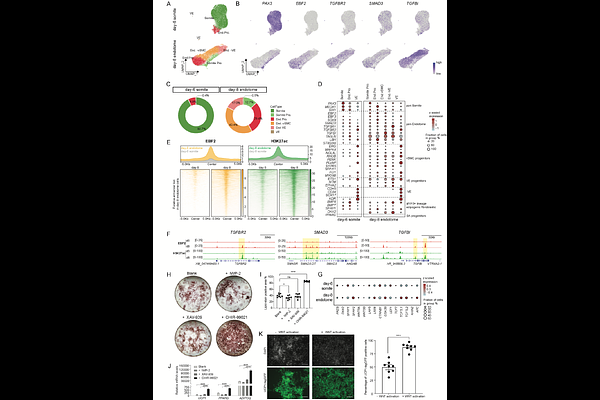
AbstractBrown adipocytes (BAs) hold therapeutic promise for obesity and metabolic diseases. While interscapular BAs derive from Pax3+/Myf5+ dermomyotome, peri-aortic BAs are inferred from an unknown Pax3+/Myf5- somitic origin. Here, we identify human endotome as an MYF5-independent source of peri-aortic BAs. Through interrogating public mouse organogenesis and in-house human trunk embryoid single-cell data, we show that the early endotome cells are MYF5-independent and are primed by TGF-{beta}-induced epithelial-to-mesenchymal transition. Mechanistically, endotome-to-BA specification requires sequential BMP inhibition and Wnt activation. This roadmap results in UCP1-expressing and metabolically active BAs that transcriptionally resemble in vivo peri-aortic BAT. The multipotent endotome cells also give rise to vascular smooth muscle and endothelial cells, offering a self-sufficient source for BAT vasculature. Endotome-derived BAs show accelerated differentiation, reduced heterogeneity, and sustained Wnt activity. Thus, the endotome provides a versatile platform for generating BAs and supporting vasculature, with implications for cell-based therapy and tissue engineering in metabolic disease.