Viscoelastic Niches Shape γδ T-Cell Phenotype and Effector Function

Viscoelastic Niches Shape γδ T-Cell Phenotype and Effector Function
Obuseh, F. O.; Chang, M.; Price, J.; Ruark, K.; To, T.; Lourenco, L.; Budnik, B.; Mooney, D.
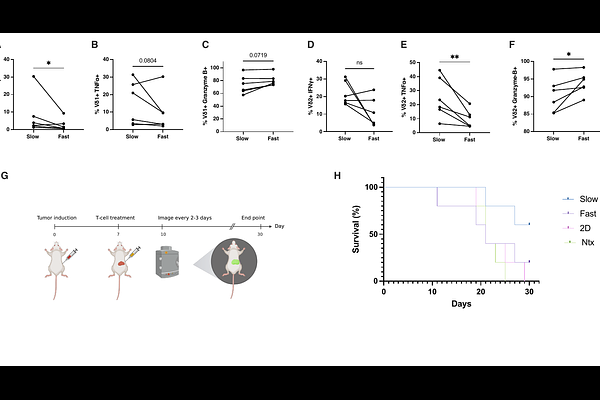
Abstract{gamma}{delta} T-cells, which are predominantly enriched in epithelial tissues, have been used in cancer therapy because of their capacity for rapid cytotoxicity in an MHC-independent manner. Current paradigms are largely agnostic to the role of tissue mechanical cues in regulating {gamma}{delta} T-cell function. Here, we investigated the role of matrix viscoelasticity in modulating {gamma}{delta} T-cell migration, differentiation state, phenotype, and function. Using a tunable collagen-based gel system, we found that encapsulation in highly-elastic (slow-relaxing) matrices preserved a less differentiated phenotype, as evidenced by CD27 and CD45RA expression. Slow-relaxing matrices also increased expression of Fas and PD-1, while decreasing expression of CD11a. Despite increased PD-1 expression, these cells remained functional, as demonstrated by high levels of TNF- and IFN-{gamma} relative to PD-1-negative cells. Proteomic analysis revealed that {gamma}{delta} T-cells respond to changes in viscoelasticity through actin remodeling and shifts in metabolic machinery. Overall, when compared to non-encapsulated cells (2D culture), encapsulated {gamma}{delta} T-cells showed increased expression of cytotoxic programs. Functionally, cells encapsulated in slow-relaxing gels showed improved control of tumor growth in an aggressive HCT116 tumor model. Together, these findings establish matrix viscoelasticity as an important regulator of post-thymic {gamma}{delta} T-cell differentiation and function.