Benzyl Cyanide Triggers A Regeneration Program in Arabidopsis

Benzyl Cyanide Triggers A Regeneration Program in Arabidopsis
Wojcikowska, B.; Marzec, M.; Falinska, J.
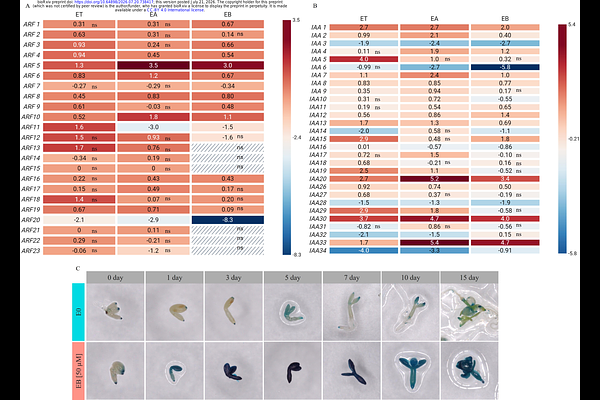
AbstractPhenylacetic acid (PAA) is a naturally occurring auxin whose biosynthesis and function during plant regeneration remain poorly understood. PAA may be synthesized from phenylalanine via the CYP79A2-dependent phenylacetaldoxime pathway, in which benzyl cyanide/phenylacetonitrile (BnCN/PAN) is a potential intermediate and substrate for NITRILASE (NIT) enzymes. Here, we investigated whether BnCN/PAN promotes somatic embryogenesis (SE) through NIT-dependent PAA biosynthesis. Low concentrations of BnCN/PAN stimulated somatic embryo formation in Arabidopsis thaliana, whereas exogenous PAA also promoted embryogenic induction. Transcriptome profiling revealed that BnCN/PAN upregulated genes associated with SE, including key embryogenic regulators and EMBRYO DEFECTIVE genes. RNA-seq data further indicated enhanced auxin signalling, which was independently confirmed using the pDR5::GUS reporter line. Inhibition of NIT activity by heatin reduced the embryogenic competence of BnCN/PAN-treated explants, supporting the involvement of NIT enzymes in this response. Collectively, our findings provide the first evidence that BnCN/PAN promotes embryogenic transition and suggest that NIT functions in SE extend beyond their proposed role in indole-3-acetic acid biosynthesis.