Identification of small-molecule enhancers of circadian rhythm amplitude in central and peripheral clocks

Identification of small-molecule enhancers of circadian rhythm amplitude in central and peripheral clocks
Joshi, M.; Albert, F.; Meijer, J.; Michel, S.; Geurink, P. P.
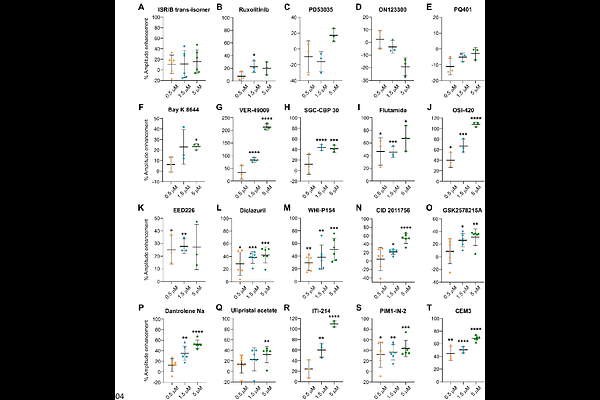
AbstractThe circadian clock regulates daily rhythms in metabolism, behavior, and physiological homeostasis. Damped or disrupted circadian rhythms are linked to physiological malfunctions, including neurodegeneration, metabolic syndrome, and cancers. Enhancing circadian rhythm amplitude can strengthen the processes regulated through the circadian system and offer a potential therapeutic approach. Here, we present eight small-molecule enhancers of circadian amplitude with previously unrecognized roles in circadian regulation. By using a Bmal1 transcription reporter system in NIH3T3 fibroblasts, we screened a drug repurposing library comprising 5,631 diverse compounds. Through which eight molecules were identified to increase circadian amplitude across multiple cycles, in a dose-dependent manner, without significantly perturbing period or phase. We evaluated the physiological potential of these compounds in ex vivo mouse tissues expressing PER2 luminescence reporter. A set of compounds tested in organotypic liver or suprachiasmatic nucleus slices enhanced the circadian amplitude in respective tissues, showing their suitability for peripheral as well as central clocks. Single-cell imaging of suprachiasmatic nucleus slices revealed that amplitude enhancement results from increased expression of clock proteins in individual cells rather than from intercellular synchronization. Together, these compounds and their targets present a new array of circadian amplitude modulators that may present opportunities to pharmacologically enhance clock robustness in physiology and disease.