Pollination ecology of a threatened lupine from the core to northern edge of its geographic range

Pollination ecology of a threatened lupine from the core to northern edge of its geographic range
Blondeau, M. A.; So, C. P.; Hargreaves, A. L.
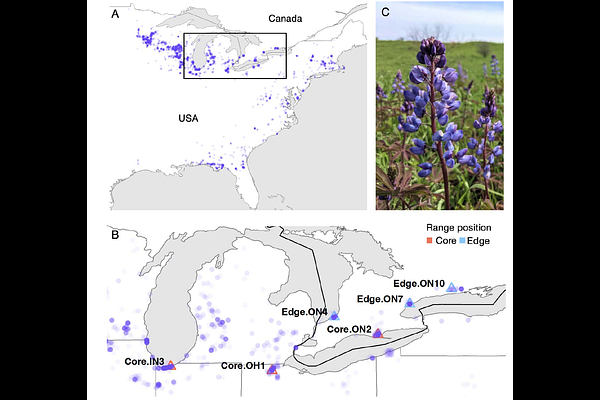
AbstractLack of sexual reproduction limits the fitness and long-term viability of many plant populations. This may pose a particular problem for populations at the edges of species ranges, which are often small and isolated and therefore may be less likely to attract pollinators. But despite the fact that many range-edge populations are of significant conservation concern and value, there is often little information about which visitors are effective pollinators, and few explicit tests of whether range-edge populations experience reduced pollination. Here, we assess which visitors are effective pollinators of sundial lupine (Lupinus perennis), a legume that is threatened in much of its range, and whether pollination success varies between populations in the range core and those at the species northern range edge. Across six populations in the northern USA and southern Canada (Ontario), sundial lupine was visited almost exclusively by bees, but only large bees (Bombus, Xylocopa) could be confirmed as effective pollinators in single-visit experiments. While seed production varied significantly among populations, visitation rates did not. Neither pollinator visitation, pollen receipt, nor seed production declined at sundial lupine's northern range edge. We therefore found no evidence that pollination success constrains either performance of at-risk populations of sundial lupine or the species northern range limit.