Regional trait-threat interactions determine extinction risk in plants.

Regional trait-threat interactions determine extinction risk in plants.
Dennehy-carr, Z. H.; LaFrance, R.; Soltis, D. E.; Soltis, P. S.; Guralnick, R.
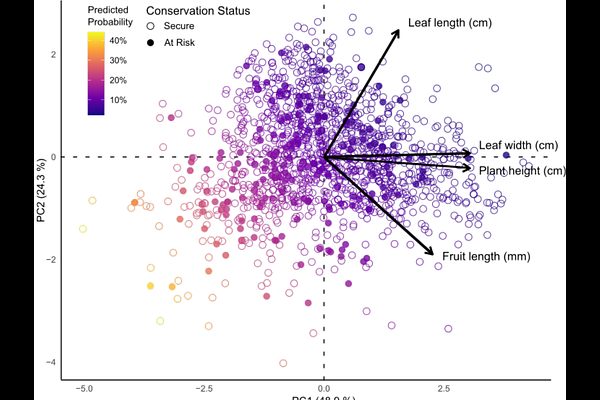
AbstractGlobal plant biodiversity and associated ecosystem services are being severely threatened by human activities and land-use change. This has led to an immense effort to assess the extinction risk of individual species and associated drivers to inform conservation actions and priorities. However, we lack a more general understanding of the processes that determine variation in vulnerability and resilience among plant taxa facing the same threats in the same or similar ecological conditions and geographic regions. This research helps identify these generalities and determines species and traits that are at disproportionate risk of extinction. Given Floridas high levels of biodiversity and endemism, coupled with ongoing rapid and extensive human development, we use the state's native flora as our model system. By combining data on extinction risk, human-induced threats, and plant functional traits, our results show that species threatened with extinction cluster within trait space, with smaller herbaceous species at greater risk than larger woody species. We also find that all categories of threat considered in our study (Development and Infrastructure; Environmental Change and Modification; Natural Hazards and Climate Change; and Resource Extraction) increase extinction risk except for the Invasive Species, Pests, and Diseases threat category. Generalised linear mixed-effect models show differing responses of species to environmental change, habitat loss, and fragmentation, driven by differences in life-history strategies and dispersal capabilities and mechanisms. The varied responses of species facing the same threats uncovered here highlight that plant functional traits in the context of regional ecosystem processes can be used to predict species-specific responses to threats and land-use change, providing a valuable resource for conservation management and prioritisation.