Impact of Solvent Extraction on Bioactive Properties of Lavandula x intermedia: Antibacterial, Antioxidant and Phenolic Content Analysis

Impact of Solvent Extraction on Bioactive Properties of Lavandula x intermedia: Antibacterial, Antioxidant and Phenolic Content Analysis
GÜRSES, G.
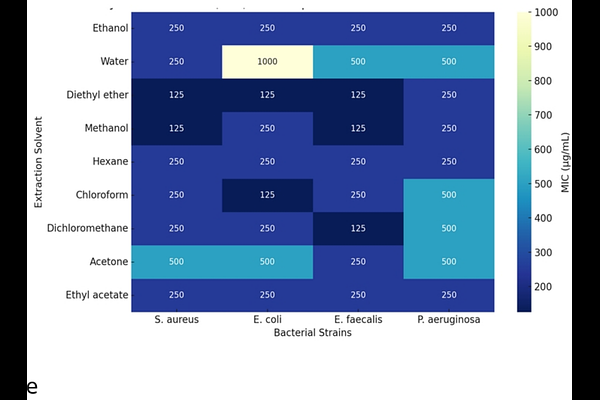
AbstractLavandula x intermedia (lavandin) is an economically important hybrid valued for its high essential oil yield; however, studies linking solvent polarity to its bioactivity and phenolic composition remain limited. This study evaluated the effects of nine extraction solvents on the antibacterial and antioxidant activities of L. x intermedia, determined total phenolic content (TPC), and examined the relationship between chemical composition and biological activity. Aerial parts were extracted by maceration. Antibacterial activity was assessed using the broth microdilution method against four bacterial strains, while antioxidant capacity was measured by the DPPH assay. TPC was determined using the Folin-Ciocalteu method, and phenolic compounds were analyzed via LC-MS/MS. Results showed that solvent polarity significantly influenced bioactivity. Diethyl ether extracts exhibited the highest TPC (267.65 mg GAE/g), strongest antioxidant activity (: 72.26 {micro}g/mL), and notable antibacterial effects (MIC: 125 {micro}g/mL), especially against Gram-positive bacteria. A strong positive correlation (r = 0.887) was observed between phenolic content and antimicrobial activity. LC-MS/MS identified key compounds, including fumaric acid, resveratrol, and hydroxycinnamic acid. Overall, moderate-polarity solvents such as diethyl ether and methanol were most effective, highlighting L. x intermedia as a promising natural source for pharmaceutical and nutraceutical applications.