Mechanisms involved in cefiderocol resistance in French Pseudomonas aeruginosa clinical strains

Mechanisms involved in cefiderocol resistance in French Pseudomonas aeruginosa clinical strains
GAUTHIER, E.; PISANI, M.; BOUR, M.; GROSJEAN, M.; Plesiat, P.; SAFARI, S.; Hartkoorn, R. C.; SOURO, L.; Pretot, E.; Jeannot, K.
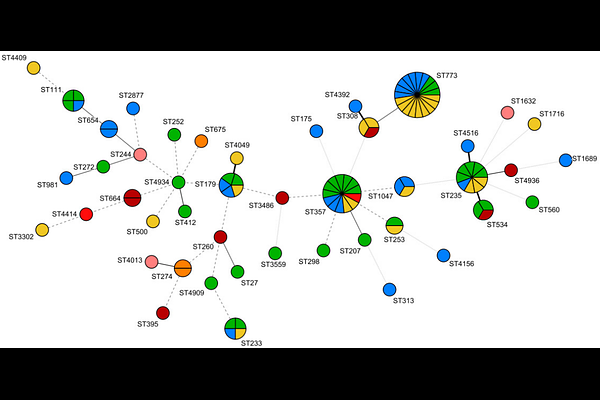
AbstractCefiderocol exhibits excellent in vitro activity against Pseudomonas aeruginosa; however, resistance can emerge. We investigated the molecular mechanisms underlying cefiderocol resistance (MIC >2 mg/L) in 103 clinical strains collected from 61 hospitals (2021-2024). MICs ranged from 4 to >128 mg/L, with 39.8% of strains showing MICs >8 mg/L. Although 37.8% were classified as difficult-to-treat resistant (DTR), acquired {beta}-lactamases were detected in 72.8% of strains, including carbapenemases (39.8%), mainly NDM-1 (29.1%), and Extended Spectrum {beta}-Lactamases (ESBLs) (38.8%). Cloning of 11 {beta}-lactamases into pUCP24, including the acquired cephalosporinase PAC-1 and ESBLs (VEB-1, and VEB-9), resulted in marked increases in cefiderocol MICs (up to 128-fold). Introduction of 6 mutations in the PDC enzyme into a PAO1{Delta}blaPDC-1 background increased MICs up to 4 mg/L and conferred cross-resistance to ceftolozane/tazobactam, notably F121L, G157D, T70I, and E219K. Alterations in siderophore transporters or regulators were identified in 38.8% of strains, most frequently a PirR frameshift (R132fs), consistent with PirR inactivation, which was confirmed in the PAO1 strain to contribute to cefiderocol resistance. Overall, cefiderocol resistance in clinical strains is multifactorial, mainly involving acquired {beta}-lactamases (ESBLs, carbapenemases) and impaired siderophore uptake (PiuA/PiuD, PirA, PiuC), leading to high-level resistance (>8 mg/L). The polyclonal distribution and diversity of mechanisms highlight the need for routine susceptibility testing and surveillance. Detection of NDM producers is critical, as cefiderocol should be used with caution in this context.