Peripheral sensory terminal degeneration is linked to sensory fiber hyperexcitability in paclitaxel-induced peripheral neuropathy

Peripheral sensory terminal degeneration is linked to sensory fiber hyperexcitability in paclitaxel-induced peripheral neuropathy
Du, J.; Abdi, S.; Wu, Z.; Yang, Q.
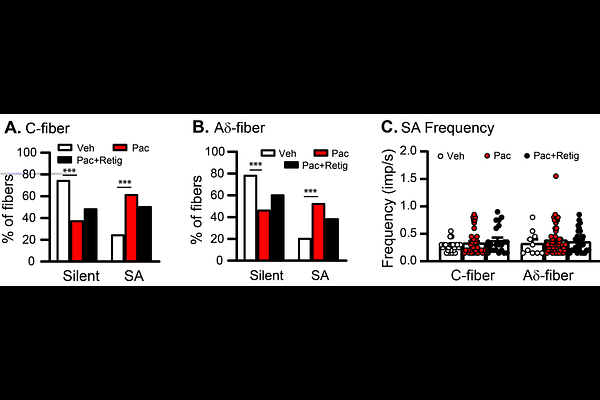
AbstractPaclitaxel-induced peripheral neuropathy (PIPN) is the most common dose-limiting side effect of paclitaxel chemotherapy, yet the relationship between structural damage to peripheral nerve terminals and functional impairment of nociceptors has not been directly examined. Here we combined ex vivo skin-nerve electrophysiology with three-dimensional (3D) imaging of fDISCO-cleared glabrous skin to characterize both morphological and functional changes in peripheral sensory terminals following paclitaxel treatment in rats. Five weeks after paclitaxel administration, skin-nerve recordings revealed a marked increase in the proportion of C- and A{delta}-fibers exhibiting spontaneous discharge (approximately 2.4- and 2.6-fold increases, respectively) compared to vehicle-treated controls. Paclitaxel also selectively reduced the mechanical activation threshold of C-fibers without affecting A{delta} fibers. Three-dimensional reconstruction of PGP9.5-immunolabeled nerve terminals showed that sensory fibers in glabrous skin form a vertically oriented, tree-like architecture. Paclitaxel treatment severely reduced both the terminal branch length and the density of free nerve endings in the epidermis. Strikingly, co-administration of the Kv7 channel activator retigabine prevented both the electrophysiological and morphological alterations induced by paclitaxel. These findings provide direct evidence that peripheral nerve terminal degeneration and hyperexcitability co-occur in PIPN and that Kv7 channel activation can protect against both structural and functional damage.