11β-HSD2 buffers fetal glucocorticoid exposure inducing Per1 expression under maternal stress

11β-HSD2 buffers fetal glucocorticoid exposure inducing Per1 expression under maternal stress
Yabumoto, K.; Umemura, Y.; Watanabe, H.; Endo, Y.; Koike, N.; Kakibuchi, A.; Sugimoto, A.; Mori, T.; Kondoh, G.; Yagita, K.
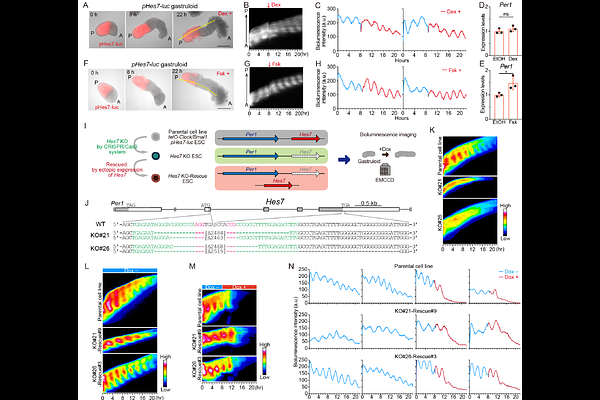
AbstractGlucocorticoids (GCs) have been proposed as maternal-fetal communication signals. However, fetal circadian rhythms are initially shielded from maternal entrainment, in addition to delayed circadian clock emergence due to CLOCK suppression. Premature CLOCK/BMAL1 activation disrupts Hes7-driven somite-like structure in gastruloids. Given the genomic proximity of Per1 to Hes7 and their transcriptional ripple effect, the physiological significance of delayed cell-autonomous circadian clock development and the temporal program of maternal-fetal communication during the developmental process have remained unclear. Here, based on a marked decline in Hsd11b2, encoding a GC-inactivating 11{beta}-HSD2 enzyme, during organogenesis, we performed split-litter embryo-transfer experiments in which Hsd11b2 knockout (KO) and wild-type (WT) embryos shared the same maternal environment. Amniotic fluid (AF) GCs remained low and arrhythmic under basal conditions. In contrast, maternal stress caused a pronounced GC surge and Per1 induction in KO, suggesting that 11{beta}-HSD2 buffers acute maternal GC surges. Despite the genomic proximity of Per1 to Hes7 and their transcriptional ripple effect, stress-associated and pharmacological GC exposure recapitulated no overt segmentation defects in vivo. Embryonic stem cell-derived gastruloid assays confirmed that neither GC exposure nor Per1 induction arrested Hes7 oscillations, whereas premature CLOCK/BMAL1 activation impaired these processes even in Hes7 KO gastruloid with ectopic rescue, suggesting that interference with the segmentation clock is mediated by premature CLOCK/BMAL1 activation, not by GC-induced Per1 expression. These findings clearly show that maternal GC signals are selectively buffered during early development. In addition, suppression of CLOCK/BMAL1 activity preserves segmentation clock function, indicating delayed circadian clock emergence is actively regulated during embryogenesis.