Adipose GPD2 Couples Glycolytic Signals to Epigenetic Control of Metabolic Homeostasis

Adipose GPD2 Couples Glycolytic Signals to Epigenetic Control of Metabolic Homeostasis
Shi, Y.; Ding, M.; Xiao, L.; Zhang, G.; Dou, X.; Xu, H.; Xia, Y.; Ke, Y.; Man, Z.; Xia, J.; Zhang, L.; Shan, W.; Qian, S.; Tang, Y.; Tang, Q.; Liu, Y.
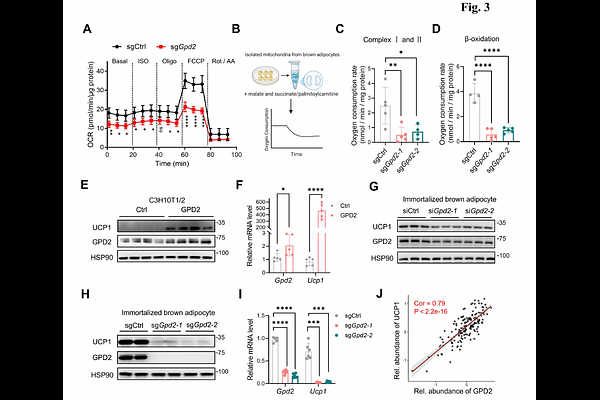
AbstractThe glycerol-3-phosphate shuttle (G3PS) is a classic reducing equivalent transferring system, yet its role in adipose metabolism remains poorly understood. Here, we identify mitochondrial glycerol-3-phosphate dehydrogenase (GPD2), the core enzyme of G3PS, as a critical orchestrator of adipose thermogenesis and systemic metabolic homeostasis. Adipocyte-specific GPD2 knockout mice exhibited impaired thermogenic capacity and energy expenditure, rendering them susceptible to obesity and metabolic dysfunction. Mechanistically, GPD2 deficiency elevated cytosolic NADH, which suppressed glycolysis and decreased the levels of key metabolites, such as acetyl-CoA, thereby diminishing H3K27ac at thermogenic gene loci and silencing these genes. NADH depletion with an NADH oxidase rescued both glycolysis and thermogenic gene expression. In support of this mechanism, we defined a previously undescribed enhancer of Ucp1 whose H3K27ac was tightly controlled by GPD2. Remarkably, replenishing the acetyl-CoA pool or directly restoring H3K27ac at the Ucp1 enhancer reversed UCP1 expression in GPD2-deficient adipocytes. Importantly, we find that human adipose GPD2 expression is inversely correlated with BMI, WHR, and HOMA-IR, underscoring its clinical relevance. Collectively, our findings establish GPD2 as an essential node in the metabolic-epigenetic axis that governs thermogenic activation and energy balance.