Agentics 2.0: Logical Transduction Algebra for Agentic Data Workflows

Agentics 2.0: Logical Transduction Algebra for Agentic Data Workflows
Alfio Massimiliano Gliozzo, Junkyu Lee, Nahuel Defosse
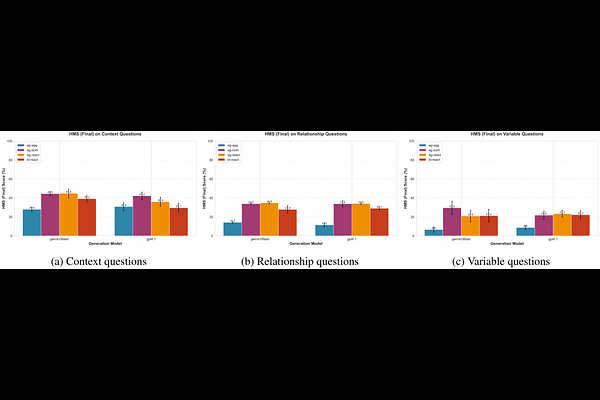
AbstractAgentic AI is rapidly transitioning from research prototypes to enterprise deployments, where requirements extend to meet the software quality attributes of reliability, scalability, and observability beyond plausible text generation. We present Agentics 2.0, a lightweight, Python-native framework for building high-quality, structured, explainable, and type-safe agentic data workflows. At the core of Agentics 2.0, the logical transduction algebra formalizes a large language model inference call as a typed semantic transformation, which we call a transducible function that enforces schema validity and the locality of evidence. The transducible functions compose into larger programs via algebraically grounded operators and execute as stateless asynchronous calls in parallel in asynchronous Map-Reduce programs. The proposed framework provides semantic reliability through strong typing, semantic observability through evidence tracing between slots of the input and output types, and scalability through stateless parallel execution. We instantiate reusable design patterns and evaluate the programs in Agentics 2.0 on challenging benchmarks, including DiscoveryBench for data-driven discovery and Archer for NL-to-SQL semantic parsing, demonstrating state-of-the-art performance.